Key Takeaways
Internet radio stations need actual audio files to upload and schedule — streaming playlists on Spotify or Apple Music won't work.
The two main routes to sourcing music are digital download stores (Bandcamp, Beatport, Traxsource) and DJ record pool subscriptions (BPM Supreme, DJcity).
Record pools make sense for high-volume, mainstream-genre stations; individual store purchases are more cost-effective for niche or back-catalogue formats.
You'll need the appropriate broadcasting licences regardless of how you source your music.
Internet radio stations source music either by purchasing tracks from digital download stores - such as Bandcamp, Beatport, and Juno Download - or by subscribing to a DJ record pool like BPM Supreme or DJcity, which provide unlimited downloads from a regularly updated catalogue for a monthly fee.
Most people's music library today exists as a playlist on Spotify or Apple Music, not as a folder of files on a hard drive. For personal listening, that's fine. For internet radio, it's a problem - you need actual audio files to upload and schedule.
There are two main routes to getting them.
Digital music stores
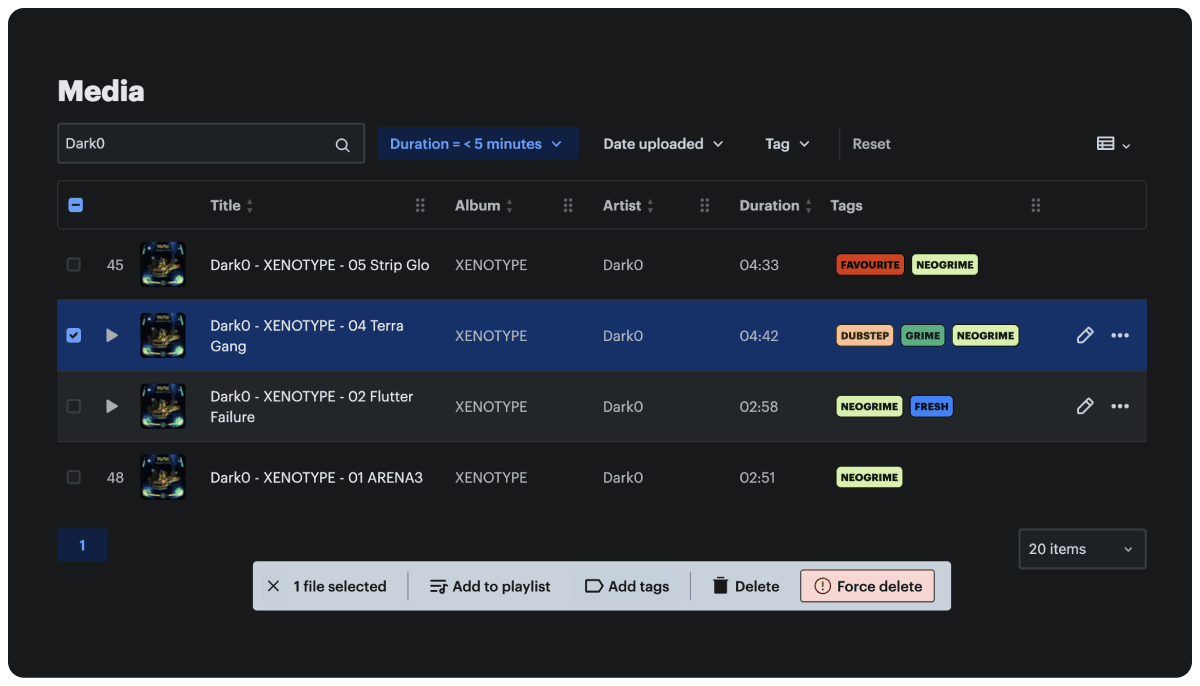
The most direct route is purchasing tracks or albums from a digital download store. Unlike streaming services, these give you a file you own - typically in MP3 or WAV format - that you can download and upload directly to your streaming platform.
Which store is right for you depends largely on your format. Different stores specialise in different genres, and for stations playing specialist music in particular, the right store can make the difference between finding what you need and drawing a blank.
| Service | Genres | Geographic restrictions |
|---|---|---|
| Bandcamp | Independent, underground, electronic, hip-hop, experimental | None |
| Beatport | Electronic (house, techno, drum & bass, trance) | None |
| Traxsource | House, soul, funk, disco | None |
| Juno Download | Electronic, indie, broad catalogue | None |
| Bleep | Electronic, leftfield, experimental | None |
| 7digital | Mainstream, pop, rock, broad catalogue | None |
DJ and record pools
Buying tracks individually works well for stations with a curated, relatively stable music library. For stations that play a high volume of music - particularly current releases across mainstream genres - purchasing track by track quickly becomes expensive and time-consuming.
Record pools are the industry's solution. Originally physical services that sent vinyl directly to DJs, today's pools are digital subscriptions that provide unlimited download access to a large, regularly updated catalogue for a monthly fee. They're designed specifically for DJs and radio broadcasters - most require proof of your station to join.
A pool subscription tends to make sense when:
- You're playing a high volume of new releases each week
- Your format spans multiple mainstream genres
- Buying individually is becoming expensive or time-consuming
If your station focuses on a specific genre or back catalogue, buying individually from a specialist store is likely more cost-effective. If you're just starting out, begin with individual purchases and move to a pool when the volume justifies it.
| Service | Genres | Geographic restrictions |
|---|---|---|
| BPM Supreme | Mainstream, urban, Latin, electronic | None |
| DJcity | Hip-hop, R&B, urban, pop, electronic | None (includes UK, Latino, Japan and DE pools) |
| Doing The Damage | House, disco, tech house | UK-focused |
| Radio DJ Pool | Mainstream, pop, urban, country | US only |
| Promo Only | Mainstream, country, urban, dance | US only |
Having the right music files is only part of the picture. You'll also need the appropriate licences to broadcast them. Our guide to internet radio music licensing covers what's required and who to contact in each territory.