Key Takeaways
Owning a track, whether a download, CD, or vinyl, does not give you the right to broadcast it. Internet radio stations need separate performance licences obtained through a PRO.
Most stations only need a blanket licence from their country's PRO. This covers all the music you play for one annual fee rather than requiring a licence per song.
In the US, an online station needs two licences: one from a performance rights organization (ASCAP, BMI, SESAC, or GMR) for the songs, and one from SoundExchange for the sound recordings, where the 2026 rate is $0.0025 per performance for nonsubscription streams. SoundExchange alone is not enough.
This article is an informational guide and should not be considered legal advice. RadioCult does not provide licensing services, consult a copyright expert in your country for guidance specific to your situation.
Internet radio has transformed how we access music and entertainment, but unlike traditional broadcasting, streaming comes with its own set of rules, particularly around music licensing.
Starting an internet radio station is normally straightforward and doesn’t require an initial license. Stations focusing on non-copyrighted content, like talk shows, can often bypass licensing concerns. However, for those incorporating copyrighted music, understanding licensing is key to ensuring smooth operations.
For more comprehensive guidance on starting a station, beyond licensing, check out our detailed guide on how to start an online radio station.
Important Disclaimer: RadioCult does not provide licensing services. We strongly recommend consulting with copyright and licensing experts specific to your country. This article is an informational guide and should not be considered legal advice.
Last reviewed: June 2026.
Why music licensing matters for internet radio
Navigating music licensing might seem overwhelming, but it's essential to ensure your station complies with legal standards.
Music licensing involves obtaining permissions to broadcast copyrighted music, ensuring artists, composers, and producers are fairly compensated. For internet radio operators, securing the right licenses isn’t just about legal compliance; it's about supporting the vibrant creative ecosystem that enriches your programming.
Operating without proper licensing exposes broadcasters to legal risks, including fines and potential shutdowns. Understanding and adhering to these requirements is essential for the longevity and success of your online radio station.
RadioCult Insight: RadioCult does not bundle licensing directly, but many station owners use the platform's scheduling tools, reports and analytics to maintain detailed playout logs, which are often required by PROs to calculate royalty payments accurately. The 24/7 Music Recognition add-on can build these logs automatically by identifying every track you play. Keeping clean records of what you broadcast makes compliance significantly easier.
See everything included in RadioCult's radio hosting, from scheduling to automated track logging, in one place.
Types of licenses required for internet radio
Understanding the types of licenses required for internet radio is crucial for legal compliance and seamless operation. Here, we’ll explore the licenses necessary to legally broadcast music and how they apply to your radio station.
Broadcasting licenses
Broadcasting licenses are essential for playing recorded music publicly on your radio station. These licenses are typically managed by performance rights organizations (PROs) that collect and distribute royalties to artists, composers, and publishers.
Blanket licenses
A blanket license is one of the most convenient options for an internet radio station. It covers a broad range of music from various artists, eliminating the need to obtain individual licenses for each song played. This type of license is ideal for stations that play a diverse array of music, providing comprehensive legal coverage with minimal administrative hassle.
Many licenses of this nature are paid on an annual basis. Your station's price depends greatly on the country you are broadcasting from and the countries you intend to broadcast to.
To get a rough idea of what you might pay, try our internet radio royalty calculator. It estimates the recording and composition fees a station in the US, UK, Canada, Ireland, France, or Germany is likely to owe based on your listeners, hours, and station type.
Mechanical licenses
Mechanical licenses cover reproducing and distributing a composition, for example digital downloads or on-demand (interactive) streaming. Standard live or scheduled internet radio is a performance, not a reproduction, so most stations do not need a mechanical licence. If you offer downloads, or produce podcasts that include commercial music, you usually need separate clearances. For podcasts, that is typically a sync and master use licence direct from the publisher and label, which is different from broadcast performance licensing.
Where to get your internet radio license
The regulatory bodies we discuss below are the organisations which will issue your station with the appropriate license(s). They are the intermediaries between your radio station and the ultimate owner of the copyrighted piece of work, whom they collect royalties on behalf of. Each of these organisations are specific to the country they administer.
It is important to note that most licenses cover the scenario where your station attracts listeners from beyond the country you broadcast from. The license should detail which countries you are permitted to broadcast to.
United Kingdom
In the United Kingdom, the two main regulatory bodies are:
-
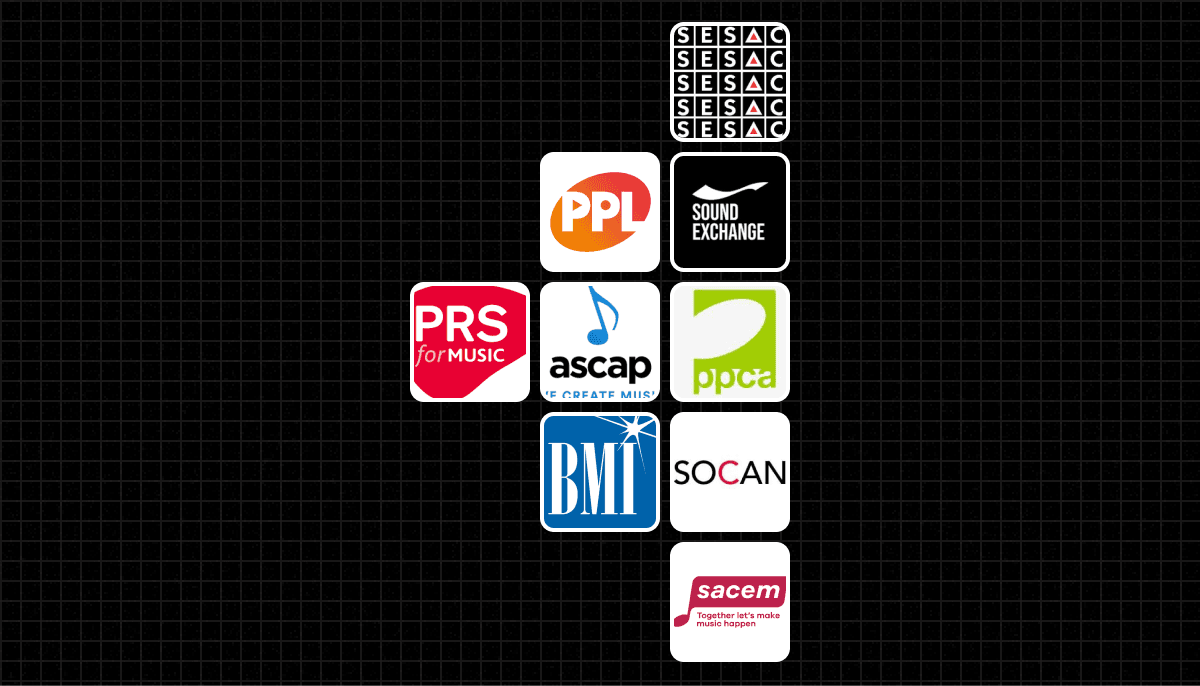
Phonographic Performance Limited (PPL): represents the interests of record labels and collect royalties from radio stations on their behalf.
-
Performing Rights Society (PRS): collects royalties on behalf of artists and composers and covers music that’s played on mediums such as radio, TV and online.
These two bodies move serious money on behalf of rights holders. In 2024, PRS for Music paid out £1.02 billion to rightsholders, the first time it has distributed more than £1 billion in its 110-year history, on revenues of more than £1.1 billion. On the recordings side, PPL collected £301.0 million in 2024, its first year above £300 million in a 90-year history, and paid more than 172,000 performers and recording rightsholders, 19,300 of them for the first time. The fees your station pays feed directly into those distributions.
United States
In the US, two separate rights are involved, so an online station usually needs more than one licence.
The first is the public performance of the musical work (the song and its lyrics). This is licensed through a performance rights organization (PRO):
- American Society of Composers, Authors and Publishers (ASCAP)
- Broadcast Music Inc (BMI)
- SESAC
- Global Music Rights (GMR)
The second is the digital public performance of the sound recording (the specific recorded track). For online and satellite radio, this is licensed through SoundExchange under a statutory licence. This is one of the few licences with a published per-play rate. For 2026, a commercial webcaster pays $0.0025 per performance for nonsubscription streams and $0.0032 per performance for subscription streams, where a single performance is one track streamed to one listener. Those rates are set by the US Copyright Royalty Board and adjusted each year for inflation. There is also a $1,000 annual minimum fee per station or channel, capped at $100,000 for services running more than 100 channels. Noncommercial webcasters pay a $1,000 annual minimum per station or channel that covers the first 159,140 aggregate tuning hours of listening a month, with the per-play rate applying above that. Student-run stations owned by an accredited school get a lighter deal still: an $800 annual minimum that covers up to 160,000 aggregate tuning hours a month in 2026.
To put the scale in context, SoundExchange had topped $11 billion in cumulative digital performance royalty distributions by the end of 2024, paying more than 700,000 creators and administering the statutory licence for over 3,000 licensees, per its 2024 annual report.
These cover different rights, so a strictly online US station typically needs both: a PRO licence for the songs and a SoundExchange licence for the recordings. SoundExchange on its own does not cover the songwriting side. On the songwriting side, the PROs distribute at real scale too: ASCAP returned $1.696 billion to its members in 2024, roughly 90 cents of every dollar it collected, while BMI committed to distribute 85% of its licensing revenue to songwriters, composers and publishers in its financial year to June 2024.
Please refer to the list at the bottom of this blog post for a more extensive account of the regulatory bodies that cover countries not discussed above.
List of worldwide licensing regulatory bodies
Please note: this list is not exhaustive. It names the main music collecting society in each country. Some countries have separate societies for songs and recordings, and these bodies change over time, so confirm directly with the society before you rely on it.
| Country | Regulatory body |
|---|---|
| Australia | PPCA |
| Argentina | SADAIC |
| Bolivia | SOBODAYCOM |
| Brazil | ABERT, ABRAMUS, UBC |
| Canada | SOCAN |
| Chile | SCD |
| Columbia | SAYCO |
| Costa Rica | ACAM |
| Cuba | ACDAM |
| Cyprus | CRTA |
| Dominican Republic | SGACEDOM |
| Ecuador | SAYCE |
| El Salvador | SACIM |
| Finland | TEOSTO, Gramex |
| France | SACEM |
| Germany | GEMA, GVL |
| Greece | GEA |
| Guatemala | AEI |
| Honduras | AACIMH |
| Iceland | STEF |
| India | IPRS |
| Ireland | PPI, IMRO |
| Italy | SIAE |
| Jamaica | JACAP, JAMMS |
| Kenya | PRISK, KAMP, MCSK |
| Lithuania | LRMD |
| Luxembourg | SACEM Luxembourg |
| Malta | BAM |
| Mexico | SACM |
| The Netherlands | SENA, BumaStemra |
| New Zealand | APRA |
| Peru | APDAYC |
| Poland | ZPAV, ZAIKS, STOART, SAWP |
| Portugal | SPA, PASSMUSICA |
| Romania | CREDIDAM |
| Russia | VOIS |
| Serbia | SOKOJ |
| South Africa | CAPASSO |
| Spain | SGAE |
| Sweden | STIM |
| Switzerland | SUISA, Audion Music |
| United Kingdom | PPL, PRS |
| Uruguay | AGADU |
| USA | ASCAP, BMI, SESAC, SoundExchange |
| Venezuela | SACVEN |
Frequently Asked Questions
Do I need a music license if I only play music I own?
Yes. Owning a copy of a song, whether a CD, vinyl, or digital download, does not give you the right to broadcast it publicly. Broadcasting requires separate performance and digital transmission licenses obtained through your country's relevant PRO.
If you're broadcasting music you created yourself, you may not need a license. However, you should check the specific regulations in your area.
What is the difference between a PRO license and a mechanical license?
A PRO (Performing Rights Organisation) license covers the public performance of music, including broadcasting on internet radio. A mechanical license covers the reproduction and distribution of music, such as digital downloads or on-demand streaming. Most internet radio stations only need PRO licenses unless they also offer downloadable content.
Do I need a separate license for every country I broadcast to?
Not usually. Most national licenses include provisions for international audiences, the license you obtain in your home country typically covers listeners tuning in from abroad. However, always check the specific terms of your license, as some have geographic restrictions.
What happens if I broadcast copyrighted music without a license?
Broadcasting copyrighted music without a license can result in legal action from rights holders, including fines, cease-and-desist orders, and potential station shutdown.
What is SoundExchange and do I need it?
SoundExchange is a US organisation that collects digital performance royalties for the sound recordings used by online and satellite radio. A US online station needs it, but it only covers the recordings. You also need a performance licence for the songs themselves from a PRO such as ASCAP, BMI, SESAC, or GMR.
Are internet radios legal?
Yes. There's no broadcast licence or transmitter required to run an internet radio station, so there's no regulatory barrier the way there is for traditional AM/FM. The legal requirement is music licensing: a performance licence from a PRO for the songs, plus a licence like SoundExchange in the US for the recordings, if you play copyrighted music. Stations playing only royalty-free, self-produced, or talk content don't need a music licence at all.
How much does a radio license cost?
It depends on your country and the license type. In the US, a commercial webcaster pays a SoundExchange minimum of $1,000 per station annually under the 2026 rates, credited against a per-performance royalty of $0.0025, plus a separate PRO licence (ASCAP, BMI, SESAC, or GMR) for the compositions themselves. Rates and minimums vary by country, see the regulatory bodies table above for where to check your local requirements.