Key Takeaways
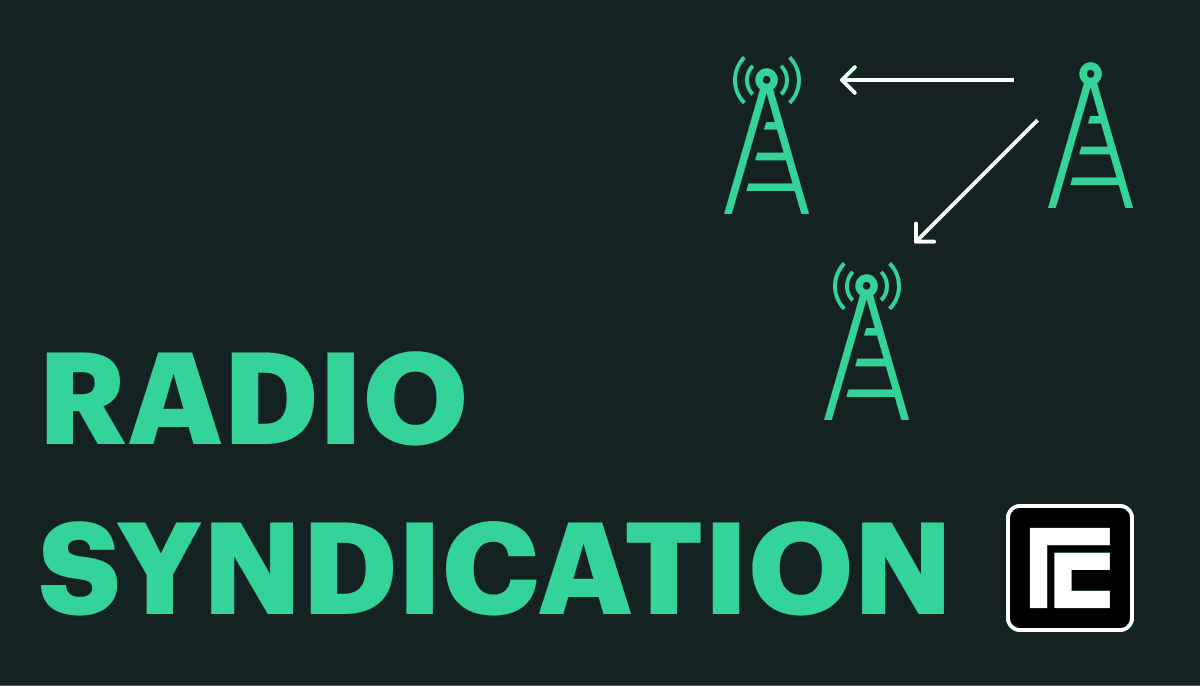
Radio syndication distributes a single show across multiple stations, networks, or platforms that otherwise share no affiliation.
It is primarily a means of distribution, but done well it also promotes the original show and station to entirely new audiences.
In 2026, syndication reaches beyond the dial: the same show can be relayed to other stations, embedded on other websites, and released on demand as a podcast.
Syndication can flow both ways, opening up cross-collaboration where partner stations carry each other's shows.
RadioCult supports syndication through relays, embeddable players, and scheduling, so an external show can air from your own stream at a set time.
As the owner or manager of a radio station you should always be on the lookout for ways to expand your station's reach. This matters because, without some form of promotion on your end, your station's growth is limited.
There are several ways to increase your station's listenership, and each has its place. The focus of this article is on one method in particular: radio syndication. We'll first explain what radio syndication is, then look at why it matters, and finally show how RadioCult helps you put it into practice.
Let's dive in.
So what is radio syndication?
We described syndication above as a way to promote your station. Technically speaking, though, radio syndication is a method of distribution.
It is the practice of show owners selling, leasing, or sharing the right to broadcast their content on other stations. In effect, a syndicated show is carried by multiple stations that need no other affiliation with each other. Classic examples are the nationally syndicated talk shows and countdown programmes that air on hundreds of local stations at once, each keeping its own branding around a shared piece of content.
Syndication is first and foremost a way to increase the distribution of a particular piece of radio content. When it works, it is also an effective promotional tool. Broadening where a show is carried means more listeners hear it, and importantly it puts new listeners in front of the original creator.
Syndication in 2026: beyond the FM dial
Traditionally, syndication meant one station licensing a show to another over the air. That still happens, but the idea has widened considerably. Today a single show can travel across three overlapping channels at once:
- Station to station. The live or pre-recorded show is relayed to partner stations that air it on their own streams, often at different times to suit each audience.
- Website to website. An embeddable player lets the same show, and its schedule, sit on multiple sites without any of them running a full station.
- On demand. The recorded episode is published as a podcast, so listeners who missed the broadcast can find it later on the platform of their choice.
That last channel is now mainstream rather than niche. An estimated 158 million Americans, about 55% of everyone aged 12 and over, listened to or watched a podcast in the last month (Edison Research, The Infinite Dial 2025). For an online station, treating each show as content that can be relayed, embedded, and re-published is simply modern syndication.
The importance of radio syndication
The value of syndication should not be understated. As mentioned above, syndicating your content can have a real impact on your station's ability to attract new listeners, making it a useful tactic for building your listenership over time.
By having your shows carried beyond your own station, you guarantee a larger audience hears them than would otherwise be the case. With the right attribution back to your station, the aim is for those other audiences to become your own. And syndication does not have to run one way. It can be a great opportunity for cross-collaboration, where each participating station carries the shows of the others.
It is also a wasted opportunity to ignore syndication altogether. Most of the effort in producing a show goes into its original broadcast on your station. With today's technology, the extra work to have that same show carried elsewhere is minimal. If a show was going to be produced for a single audience anyway, it makes complete sense to put it in front of several audiences wherever you can.
How RadioCult can help with syndicating your station
For an online station looking to syndicate its shows, RadioCult is here to help.
Our relay feature lets you add the streaming URL of another station to your media library. Once the relay has been added, you can schedule it as a show at any time, just like any other item in your programming.
When the relay is due to begin, the audio from the other station is routed through your RadioCult streaming server and broadcast from your own streaming URL. Your listeners enjoy the other station's show from the same place they already tune in for your broadcasts, with no extra apps or links to follow.
Syndication does not stop at the audio stream. With RadioCult's Radio CMS and embeddable components you can place a live player, and the accompanying schedule, on multiple websites, so a partner's show, or your own, can be followed wherever your audiences already are. Together, relays, scheduling, and embeddable players give you a practical way to distribute shows across stations and sites from one place.
Frequently asked questions
What is the difference between syndication and a network?
Syndication is the distribution of an individual show to stations that are otherwise independent of one another. A network is a group of stations that share ownership or a common feed of programming. A syndicated show can air across many unaffiliated stations, whereas network programming is carried by stations that belong to the same group.
Is podcasting a form of syndication?
In a broad sense, yes. Publishing a show as a podcast distributes the same content to a wider, on-demand audience across many listening apps. It works alongside live syndication rather than replacing it: the show airs live or relayed on stations, then lives on as an episode listeners can find later.
Can a small online station syndicate its shows?
Absolutely. Syndication is no longer limited to large broadcasters. With a relay URL, an embeddable player, and a shared schedule, even a small online station can have its shows carried by partner stations and websites, and reach listeners well beyond its own audience.