Key Takeaways
A capable community station can be built almost entirely from free, well-supported tools. The trick is picking the right one for each job.
Audacity handles editing, BUTT and Mixxx handle streaming, Canva and GIMP handle artwork, and Mixcloud and SoundCloud handle distribution, all at no cost.
Free encoders still need somewhere to broadcast to. A dedicated host is the one paid piece most community stations end up needing.
Community radio runs on volunteer time, so tools that save hours are worth as much as tools that save money.
Running a community radio station is one of the most rewarding things you can do with a microphone and a bit of spare time. It is also, for most people, done on a shoestring. In the UK alone there are now more than 300 Ofcom-licensed community stations broadcasting to their local areas (GOV.UK, Consultation on analogue community radio licensing), and almost all of them are held together by volunteers rather than budgets.
The scale of that volunteer effort is easy to underestimate. Ofcom reports that a typical community station operates with around 87 volunteers who together give roughly 209 hours of their time every week (Ofcom, Community radio). When time is that precious, the right free tool is not just a way to save money. It is a way to give your volunteers their evenings back.
This is a practical, category-by-category roundup of the free tools we would reach for when running a station on a budget. We have kept the notes honest: where something is genuinely excellent we say so, and where a free tool has real limits we say that too. Let us dive in.
Audio editing: Audacity
Every station needs to top and tail recordings, clean up a noisy interview, or cut a jingle. Audacity is the free, open-source workhorse for exactly this. It runs on Windows, macOS, and Linux, records multiple tracks, and has enough effects (noise reduction, normalisation, compression, EQ) to get a pre-record sounding tidy without spending a penny.
It is not the prettiest editor and the interface shows its age, but it is stable, endlessly documented, and does the core job as well as tools that cost real money. If you want something a little more modern for quick edits, Ocenaudio is another free option worth a look. For most community stations, though, Audacity alone will cover the editing side of things.
Encoders and streaming software
Once you have audio, you need something to send it to a server so listeners can tune in. This is where free, dedicated broadcasting software comes in.
BUTT (Broadcast Using This Tool) is a tiny, reliable encoder that does one thing well: it takes your microphone or line-in and streams it to an Icecast or Shoutcast server. It is free, cross-platform, and ideal for a simple live show. We have written a full walkthrough on setting up BUTT for internet radio if you want to get going.
Mixxx is the step up: a free, open-source DJ application with two decks, crossfading, beatmatching, and a built-in broadcast function. If your presenters are mixing music live rather than just talking, Mixxx gives them proper DJ controls at no cost. Our guide to streaming with Mixxx covers the setup end to end.
The honest catch with both is the same: an encoder only encodes. It still needs a server to stream to, plus a player, a schedule, and somewhere to store the archive. That last mile is the one piece most stations end up paying for, and it is where a dedicated host earns its keep.
Free encoders like BUTT and Mixxx need somewhere to broadcast to. RadioCult hosts your station with unlimited listeners and a free mobile app on every plan. Try it free for 7 days.
Get 7 days freeScheduling and automation
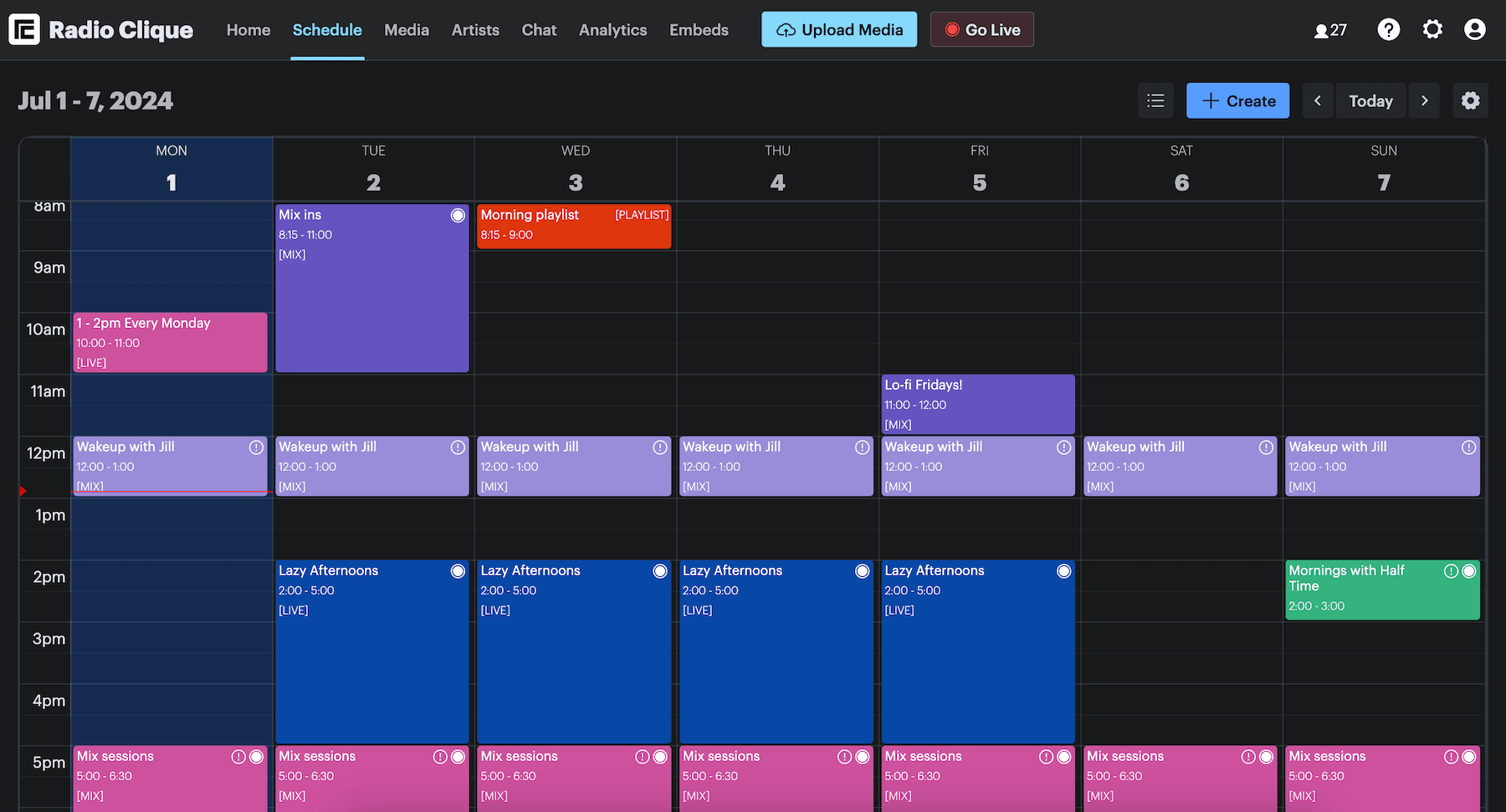
Keeping a schedule straight across a team of volunteers is half the battle. For the admin side, a shared Google Calendar is free and perfectly good for tracking who is on air when, and Calendly removes the back-and-forth when you need to book a guest or an interview.
For the on-air side, truly free automation is harder. Open-source options like LibreTime exist and can run a 24/7 playout schedule, but they need to be self-hosted, which means a server to maintain, updates to apply, and a fair bit of technical confidence. It is free in the sense that the software costs nothing, not free in the sense that it costs no time. For a volunteer team, the hours spent keeping a self-hosted stack alive are worth weighing against a managed alternative, as our guide on moving away from self-hosted radio software explains.
Artwork and branding: Canva and GIMP
Good artwork makes a small station look serious. Canva has a genuinely useful free tier for social posts, show artwork, and cover images, with templates that make design approachable for non-designers. It nudges you toward its paid plan for some assets, but you can get a long way without paying.
For anything more involved, or if you would rather avoid a subscription entirely, GIMP is the free, open-source image editor that stands in for Photoshop. It has a steeper learning curve than Canva, but it is fully featured and completely free.
Chat and community
Community radio lives or dies on its community, and free chat tools are how you keep listeners talking to each other and to you. Discord is the obvious choice for a listener community: free servers, text and voice channels, and a format your audience probably already understands. Many stations run a Discord alongside their broadcast for requests, feedback, and behind-the-scenes chat.
The one thing Discord cannot do is sit on your own site next to the player. If you want listeners chatting in the moment they are tuned in, an embeddable chat room that lives right beside your web player keeps the conversation where the audience already is, with moderation, reactions, and the same chat mirrored across web and mobile. A public Discord and an on-site chat are not rivals; the strongest stations run both.
Build a loyal audience with on-site chat rooms, embeddable players, and a free mobile app that carries your live stream and chat everywhere. Try RadioCult free for 7 days.
Get 7 days freeDistribution and archiving
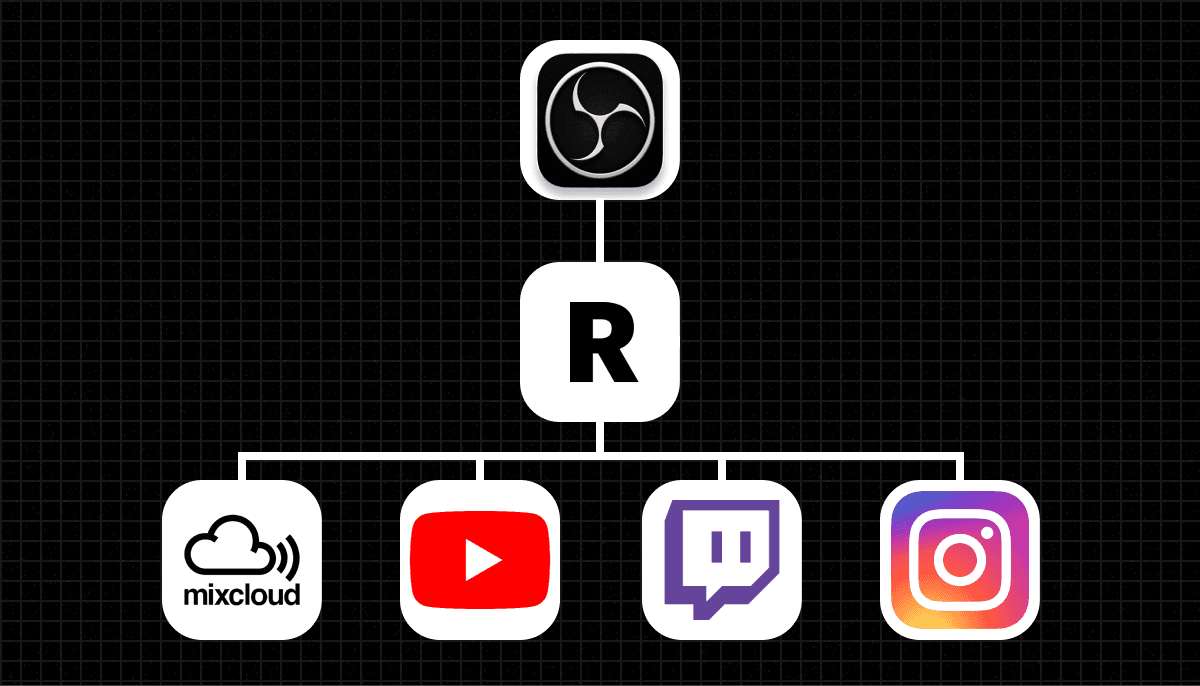
A live show is gone the moment it ends unless you archive it. Mixcloud and SoundCloud both offer free tiers that let you publish shows on demand, reach listeners searching those platforms, and give presenters a permanent home for their sets. Mixcloud in particular is popular with music radio because of how it handles licensing for mixes; our walkthrough on uploading mixes to Mixcloud covers the practicalities.
The friction is the manual upload every single week. This is one area where a host pays for itself: RadioCult can record your live shows station-side and archive them to Mixcloud and SoundCloud automatically after they air, so the catch-up content builds itself while your volunteers do something more useful. Reaching those listeners is exactly what our guidance on growing an online radio audience is built around.
Analytics
If you ever want to apply for a grant or approach a local sponsor, you need to be able to prove who is listening. Google Analytics is free and will tell you how people move around your website, which is a good start for the web side of things.
What it will not tell you is who is actually listening to the stream, from where, and on what device. That listener-level data is what funders and sponsors want to see, and it usually comes from your host rather than a free web tool. Community stations are already delivering around 93 hours of original, mostly local output a week (Ofcom, Community radio); exportable listening figures are how you turn that effort into a case for support.
Team and admin tools
Finally, the unglamorous but essential stuff. Google Workspace gives you Docs, Sheets, Slides, Forms, and Drive off the back of a free Gmail account, which covers show notes, budgets, rotas, and shared files. Slack is the free option for keeping a volunteer team organised in channels, with a searchable history that helps new members catch up (the free tier keeps 90 days of messages and up to ten app integrations).
None of these are radio-specific, but every station is also a small organisation, and running the organisation well is what frees your volunteers to focus on the radio.
Where the free stack ends
You can genuinely run a community station on free tools. Audacity edits, BUTT or Mixxx streams, Canva and GIMP handle the look, Discord and on-site chat build the community, Mixcloud and SoundCloud distribute, and Google Workspace keeps the team in order.
The one gap the free stack rarely closes cleanly is the middle: a reliable place to broadcast to, a schedule that runs itself, a player and chat for your own site, a free mobile app for your listeners, and the analytics to prove it is all working. That is the part RadioCult is built to handle, and there is a free trial so you can see whether it fits before committing.
Ready to give your volunteers their evenings back? Start your free 7-day trial with RadioCult and put the whole station in one place.
As always, keep it locked.