Key Takeaways
Start by deciding whether you need a live encoder, 24/7 automation, or an all-in-one suite. That choice narrows the field faster than any feature list.
Free tools cover most beginners: BUTT and Mixxx for cross-platform live broadcasting, RadioDJ for Windows automation, and LadioCast for a simple Mac encoder.
Paid suites like SAM Broadcaster Pro and SAM Broadcaster Cloud trade a steeper learning curve for playlist management, scheduling, and built-in audio processing in one app.
Almost none of this software includes a streaming server, so whatever you pick still needs a host to actually reach listeners.
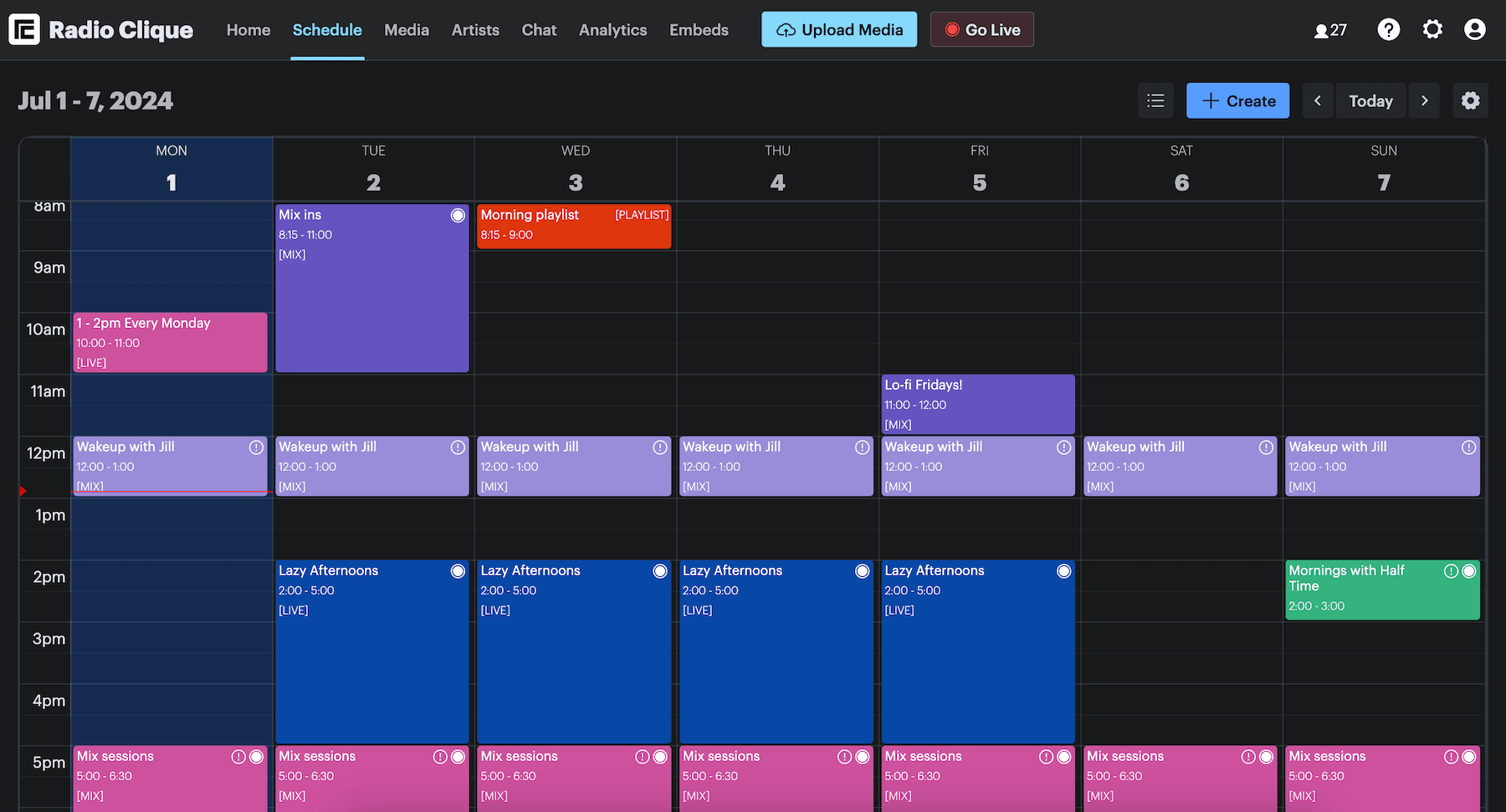
A managed platform can replace the encoder-plus-host-plus-scheduler stack with a single connected system, which suits stations that would rather not wire tools together.
Running a station takes more than a mic and a playlist, and the right software makes a real difference. This guide compares the best internet radio software for live broadcasting and 24/7 automation in 2026, organized by compatibility: cross-platform first, then Windows-only and Mac-only. Pricing was last checked in July 2026, though vendors change plans often, so confirm the current cost on each tool's own site before you commit.
If you want a plain-language explainer of what this software is and how to set it up step by step, read the bootcamp guide to internet radio software first, then come back here to choose a tool.
How to choose internet radio software
Before you compare individual tools, it helps to settle three questions. They narrow the list quickly.
Live or 24/7 automation? If you broadcast live sets, talk shows, or interviews, you mainly need an encoder that pushes your audio to a server. If you want the station to keep playing when you are not at the desk, you need automation that schedules playlists and rotations. Some tools do one, some do both.
Encoder only, or full broadcasting suite? An encoder (like BUTT or LadioCast) simply sends your audio to a streaming server. A full broadcasting suite (like SAM Broadcaster Pro) adds playlist management, scheduling, automation, and audio processing on top of the streaming. Pick the encoder if you already have a way to manage your music and schedule. Pick the suite if you want everything in one app.
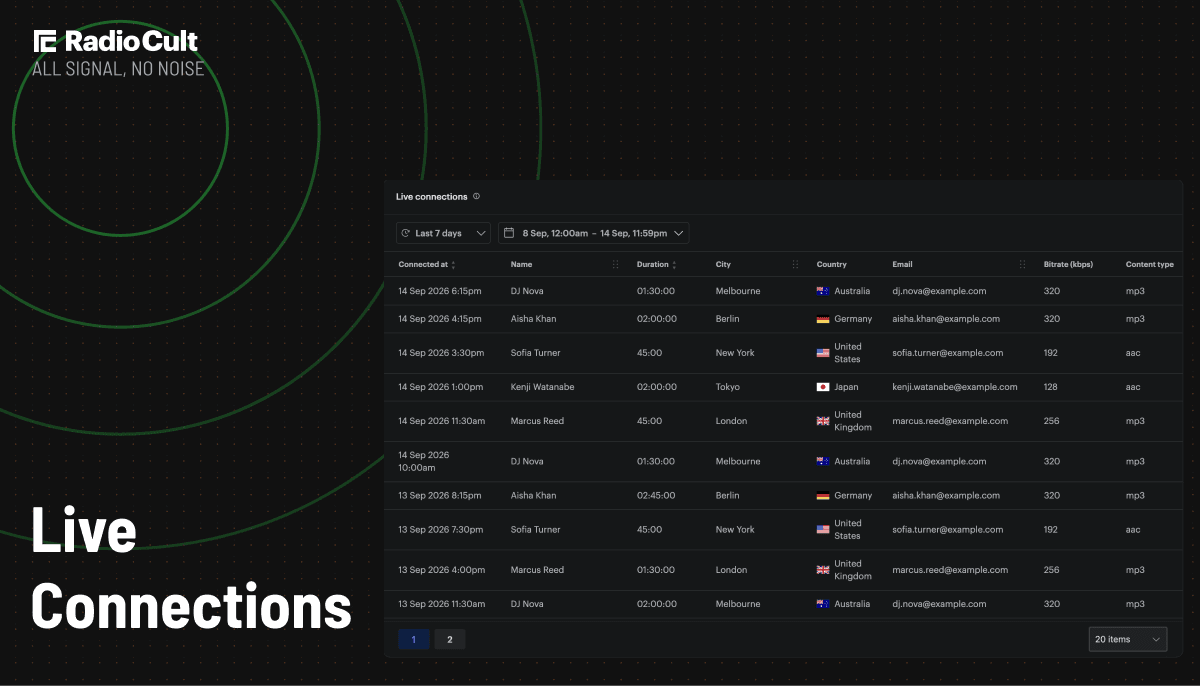
Do you also need a streaming server or host? Yes. Every tool on this list is software that runs on your machine or in a tool-specific cloud, and it still needs a streaming server to deliver audio to listeners. That is the part RadioCult provides: reliable streaming and broadcasting, scheduling, and a connected platform for your encoder or suite to broadcast to.
Here is the full comparison:
| Software | Platform | Cost (entry price) | Skill level | Built-in encoder? | Automation? | Streaming server included? |
|---|---|---|---|---|---|---|
| BUTT (Broadcast Using This Tool) | Windows and Mac | Free | Beginner | Yes | No | No |
| Mixxx | Windows and Mac | Free | Beginner | Yes | Yes (Auto-DJ) | No |
| VirtualDJ | Windows and Mac | Free home / Pro ~$19/mo | Advanced | Yes (plugin) | No | No |
| SAM Broadcaster Cloud | Windows and Mac | Paid, from ~$30/mo | Advanced | Yes | Yes | No |
| SAM Broadcaster Pro | Windows | Paid, ~$299 one-time | Advanced | Yes | Yes | No |
| RadioDJ | Windows | Free | Beginner | No | Yes | No |
| Audio Hijack | Mac | Paid, ~$69 one-time | Advanced | Yes | Yes | No |
| LadioCast | Mac | Free | Beginner | Yes | No | No |
Every tool here needs a streaming server to reach listeners, so none of them include one. Pair your choice with a host like RadioCult.
Best for at a glance
- Best free option: BUTT for live broadcasting, Mixxx if you also want DJ mixing
- Best for 24/7 automation on Windows: RadioDJ, with full rotation logic at no cost
- Best for live DJ sets: VirtualDJ, built around mixing and beatmatched transitions
- Best for Mac: Audio Hijack for advanced routing, or LadioCast for a free lightweight encoder
- Best all-in-one software: SAM Broadcaster Pro on Windows, or SAM Broadcaster Cloud for cross-platform live and automated broadcasting in one tool
- Best all-in-one platform: RadioCult, which bundles the streaming server every tool above needs with scheduling, a player, and analytics, so you do not have to wire separate tools together (see how it compares)
Cross-platform (Windows and Mac)
BUTT (Broadcast Using This Tool)
BUTT is one of the first tools many of us use to go live, and for good reason. It’s free, lightweight, easy to set up, and works on both Windows and Mac without any complicated installation steps. If you’re streaming live voiceovers, interviews, or a set straight from your audio interface, BUTT gets the job done without fuss.
Once it’s pointed at your streaming server, it just works, no bloated dashboards, no feature overload. The layout is clean: input on one side, status on the other, with basic level controls and a log to track your connection.
Some reasons it stands out:
- Cross-platform: Runs smoothly on Windows, Mac, and even Linux.
- Live only: Perfect for stations focused on live broadcasting (no automation or scheduling).
- Server compatibility: Supports Icecast and Shoutcast out of the box.
- Stability: Rock-solid uptime during live events, even under patchy connections.
BUTT isn’t built for full station management, it doesn’t handle music libraries or automate anything, but that’s exactly the point. It keeps the broadcast layer simple so you can focus on sound quality and content.
New to it? Our step-by-step guide walks through how to broadcast with BUTT, from connection settings to going live.
Cons: Live only, with no automation, scheduling, or music library, so you pair it with a host for the actual stream.
Best for: the simplest free way to go live on Windows or Mac.
Mixxx
Mixxx bridges the gap between DJ software and live broadcast tools, and does it without costing a cent. It’s free, open-source, packed with features, and runs on both Mac and Windows without licensing headaches or hidden limitations.
What really makes Mixxx shine for internet radio is its built-in encoder. You can stream directly to Icecast or Shoutcast servers without needing extra plugins or virtual audio cables.
A few reasons Mixxx stands out:
- Built-in broadcasting: No need for external encoders, stream directly from the app.
- Auto-DJ: Load playlists and let the software handle transitions when you need a break.
- Controller support: Works with a huge range of MIDI devices, from entry-level decks to pro setups.
- Customisable interface: Tailor the workspace to your style, whether that’s 2 decks, 4 decks, or library-first.
While Mixxx isn’t ideal for full-time station automation, it’s well suited to live sets, hybrid shows, and DJs who want performance tools alongside a broadcast signal. The learning curve is gentle, and because it’s open-source, updates come from a community that cares about how the tool performs.
For a full walkthrough, see our guide on how to broadcast with Mixxx, including its built-in encoder settings.
Cons: The Auto-DJ covers basic unattended playback, but it isn’t a full 24/7 automation system, and the DJ-first layout can feel like a lot if you only want to stream.
Best for: a free tool that combines DJ mixing with a built-in encoder.
VirtualDJ
VirtualDJ wasn’t built specifically for internet radio, but with the right setup, it can handle live streaming like a pro. For DJs looking to broadcast live sets with visual flair and smooth mixing, it’s a strong option. If you prefer Native Instruments' Traktor, our Traktor guide shows how to stream from it to your station.
What makes it work for radio is the broadcasting plugin. With just a few configuration steps, VirtualDJ connects directly to Icecast or Shoutcast servers. From there, you’re streaming in real time with full control over decks, tempo and EQs.
Where VirtualDJ fits best:
- DJ-first interface: Optimised for live sets and beatmatched transitions.
- Broadcast plugin: Built-in encoder for radio streams.
- Customisable layout: Tailor the workspace to your mixing style.
- Controller support: Pairs easily with just about any DJ hardware.
This isn’t the right tool for long-form automation or behind-the-scenes scheduling. VirtualDJ is free for personal home use, but broadcasting and the professional feature set sit behind a Pro subscription, which starts at around $19 per month. When live energy is the priority, especially for shows built around mixing, VirtualDJ delivers a polished, club-ready broadcast.
Cons: Broadcasting needs a paid Pro subscription and some plugin configuration, and there is no station automation or scheduling.
Best for: live DJ sets where mixing and beatmatching come first.
SAM Broadcaster Cloud
SAM Broadcaster Cloud is a paid tool that gives you the flexibility of cloud automation without losing the live DJ features that make stations feel human. Plans start at around $30 per month for the Silver tier, with a higher Gold tier at around $90 per month, and there is a 14-day free trial to test it first.
Everything runs from a browser, but there’s also an optional desktop app for live control. That makes it a solid pick for stations with team members spread across time zones or switching between devices. Scheduling music blocks, setting up rotations, and inserting timed content (like IDs or promos) is all handled in the backend, reliably and without constant micromanagement.
Why SAM Cloud is a strong choice:
- Cross-platform access: Fully cloud-based with support for both Mac and Windows users.
- Live and automated: Switch between scheduled content and real-time DJs.
- Redundancy built-in: No risk of losing your feed if a local machine crashes.
- Listener tools: Includes stats, monetization options, and station branding features.
It’s especially useful for stations that want a set-it-and-forget-it structure during off-hours but still want live broadcasting during prime slots.
Cons: Paid, and the cloud-first model means you depend on the provider rather than running everything locally.
Best for: an all-in-one tool that runs in the cloud and works on both Mac and Windows.
Windows only
SAM Broadcaster Pro
SAM Broadcaster Pro has been a cornerstone of internet radio for over a decade, and for stations running on Windows, it still holds up. It’s a one-time purchase, priced at around $299, so it is the kind of paid tool you grow into as your station matures rather than a recurring subscription. A 14-day free trial lets you try it before buying.
The interface may feel dense at first, but every panel serves a purpose. You can queue tracks manually, schedule rotations, insert ads, and broadcast live, all from a single dashboard. Built-in audio processing gives you control over how your station sounds, with DSP effects, normalization, and crossfade settings dialled in for a smooth listener experience.
Here’s where SAM Broadcaster Pro excels:
- All-in-one control: Manage music, schedule programming, and go live from one app.
- Advanced processing: Built-in compressors, EQs, and DSP chains to polish your sound.
- Playlist automation: Custom categories, rotations, and timed blocks.
- Reliable streaming: Supports multiple servers and formats simultaneously.
This isn’t the tool for someone looking to jump on air quickly, SAM Pro takes time to configure properly. But once it’s set up, it offers a high level of control and broadcast stability.
Cons: Paid, Windows only, and the dense interface has a steep learning curve before you are on air.
Best for: an all-in-one Windows suite that handles music, scheduling, and live broadcasting from one dashboard.
RadioDJ
RadioDJ has built a loyal following for good reason. It’s a free, Windows-based automation system packed with features you’d normally expect from paid software.
Its strength is in 24/7 scheduling. Once your music library is organised and your categories are set, RadioDJ takes over. It builds rotations dynamically, keeps logs, inserts sweepers, and handles playback transitions smoothly. Live mode lets you jump in when needed, but the software is more than capable of holding down a full schedule on its own.
Here’s what makes RadioDJ stand out:
- Cost-effective: Completely free with no usage limits or watermarks.
- Built-in rotation logic: Automatically generates playlists based on your rules.
- Live assist mode: Smooth transition between automated and live content.
- Database-driven: Uses MySQL or MariaDB for stable media handling.
RadioDJ doesn’t include a built-in encoder, so you’ll need to pair it with a tool like BUTT or MB Recaster to get your stream online. But once configured, it becomes a strong foundation for stations focused on consistent, hands-off programming, with room to scale when you’re ready.
Cons: Windows only, with no built-in encoder, so you add a separate streaming tool, and the database setup takes some effort up front.
Best for: free 24/7 automation on Windows.
Mac only
Audio Hijack
Audio Hijack is a capable recording and routing tool for Mac users, especially when you want precise control over every sound source. It works behind the scenes, capturing, processing, and routing audio from any app or device on your Mac before sending it to your chosen output.
You can rely on Audio Hijack when your station needs to combine multiple audio sources, like live microphones, music players, and system sounds, into a single polished stream. Its flexibility is unmatched, with options to add effects, filters, or volume adjustments on the fly. It ships with a free trial, and a single-user license is a one-time purchase of around $69, so there is no subscription to keep paying.
Key features that make Audio Hijack essential:
- Advanced audio routing: Capture audio from apps, devices, or system audio.
- Live processing: Apply effects, compression, EQ, or noise gates in real time.
- Flexible output: Route audio to files, other apps, or streaming software.
- Scheduling and automation: Automate recordings or audio setups at specific times.
Audio Hijack is well suited to stations that want to fine-tune every audio element before it reaches listeners.
Cons: Mac only and paid, and it focuses on capture and routing rather than full station automation or a music library.
Best for: advanced audio routing and processing on Mac.
LadioCast
LadioCast offers a simple yet effective streaming encoder for Mac users who want to get on air without fuss. Lightweight, free and easy to navigate, it connects directly to popular streaming servers like Icecast and Shoutcast, making it a go-to choice for many Mac-based internet radio stations.
The interface might look basic, but it covers essential features: volume control, input selection, and multiple stream outputs.
What makes LadioCast a reliable pick:
- Straightforward setup: Quickly connect to streaming servers with minimal configuration.
- Multiple inputs: Mix audio from different sources within the app.
- Support for multiple streams: Broadcast to more than one server simultaneously.
- Real-time volume adjustments: Manage input and output levels on the fly.
While it doesn’t offer built-in automation or scheduling, LadioCast’s simplicity and stability suit live broadcasts or stations that rely on external tools for automation.
Cons: Mac only, with no automation, scheduling, or music library, so it handles the encoding and nothing more.
Best for: a free, lightweight encoder on Mac.
Choosing the right internet radio software shapes your station’s workflow and listener experience. Whether your team uses Windows, Mac, or both, the options above cover everything from lightweight live encoders to full broadcasting suites, though if stitching these tools together gets tiresome you can always move to a managed radio platform instead.
The right internet radio platform pulls all of this together. Most of the tools above, whether a simple livestream encoder or a full broadcasting suite, still need a streaming server to connect to. RadioCult gives you reliable streaming, scheduling, and a connected platform built for independent and community radio, so your software always has somewhere dependable to broadcast to. You can weigh it against the paid suites above on the pricing page.
If you are still deciding what this software actually does and how it fits together, the bootcamp guide to internet radio software walks through the basics and setup before you pick a tool here.
Frequently Asked Questions
What is the best free internet radio software?
BUTT, Mixxx, RadioDJ and LadioCast are all completely free. BUTT is the simplest for live broadcasting, Mixxx adds DJ mixing capabilities, and RadioDJ offers full 24/7 automation on Windows.
Do I need separate software for live broadcasting and automation?
It depends on the tool. All-in-one suites like SAM Broadcaster Pro handle both live and automated broadcasting. Simpler tools like BUTT only handle live streaming, so you'd pair them with a scheduling platform like RadioCult for automation.
Can I use internet radio software on a Mac?
Yes. BUTT, Mixxx, VirtualDJ, and SAM Broadcaster Cloud all work on Mac. For Mac-only options, Audio Hijack offers advanced audio routing and LadioCast provides a free, lightweight encoder.
What's the difference between an encoder and a full broadcasting suite?
An encoder (like BUTT or LadioCast) simply sends your audio to a streaming server. A full broadcasting suite (like SAM Broadcaster Pro) adds playlist management, scheduling, automation, and audio processing on top of the streaming capability.
Do I need a streaming server as well as software?
Yes. Every tool in this guide runs on your machine or in a tool-specific cloud, and it still needs a streaming server to deliver audio to listeners. The software encodes and sends your audio, and the server distributes it. RadioCult provides that streaming server along with scheduling and a connected platform, so your encoder or suite has somewhere reliable to broadcast to. See what radio hosting includes.
How much does internet radio software cost?
It ranges from free to a few hundred dollars. BUTT, Mixxx, RadioDJ and LadioCast are free. VirtualDJ is free for home use, with a Pro subscription from around $19 per month for broadcasting. SAM Broadcaster Cloud starts at around $30 per month, SAM Broadcaster Pro is a one-time purchase of around $299, and Audio Hijack is a one-time license of around $69. Remember that most of these still need a separate streaming host on top, so factor that into your budget.